
Climate-resilient classrooms
Every student deserves a safe, comfortable place to learn.
Overcrowded, poorly ventilated and inaccessible classrooms can limit learning and create additional barriers for students with disabilities. Across the Pacific and South-East Asia, climate extremes are adding another challenge, with storms, heat and flooding damaging schools and disrupting education.
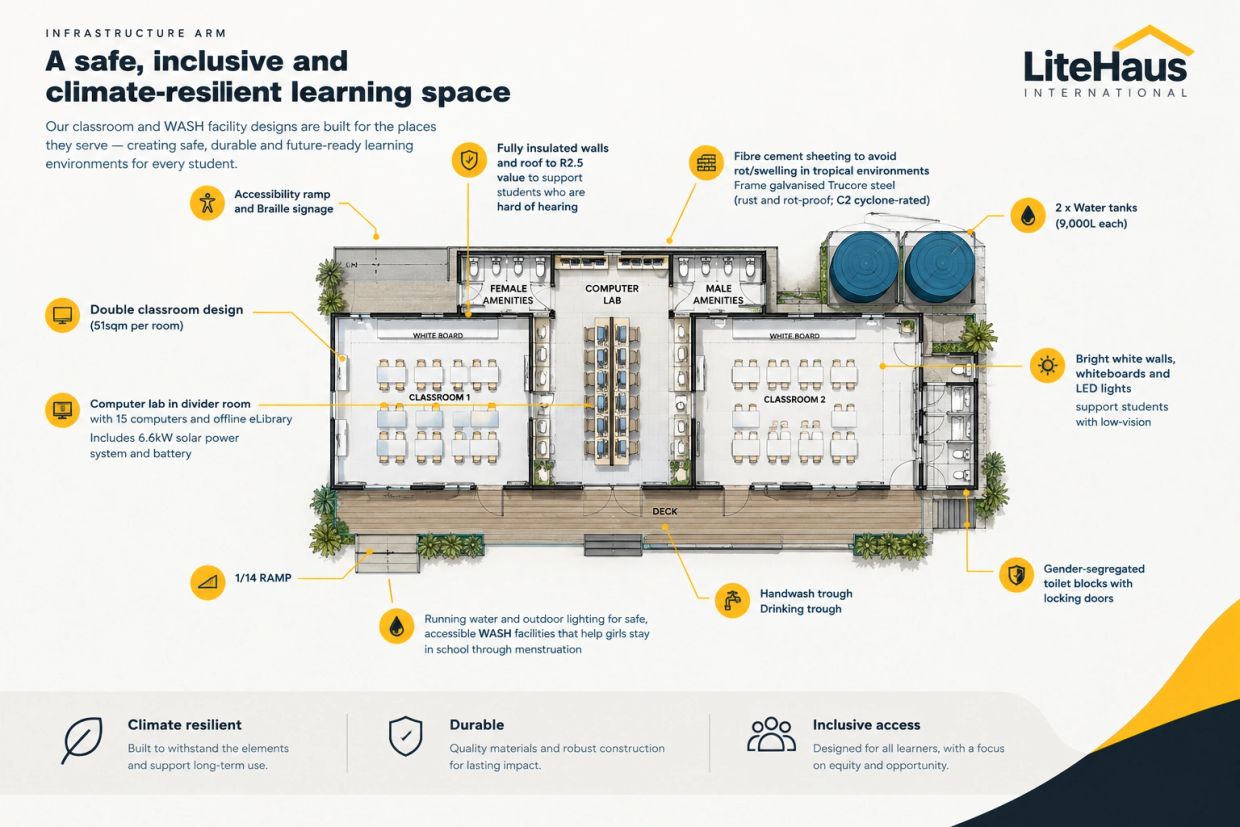
We build durable, climate-resilient double classrooms designed for tropical, high-wind environments and engineered to Australian standards.
Our classrooms feature a steel-framed, timberless design, with accessibility built into the design to create safe, inclusive and long-lasting learning spaces.

Inadequate toilets and sanitation facilities are often a top reason girls leave school after puberty. Many girls miss 3–5 days of school per month due to lack of private, clean toilets or places to wash.
According to research from UNICEF and the World Bank
Water, Sanitation & Hygiene (WASH) Program
When schools lack water and safe sanitation, students miss out.
Water shortages can force schools to close early, while inadequate sanitation disproportionately affects girls, who may miss school due to a lack of safe, private facilities and menstrual hygiene support.
We provide 9,000L water tanks and gender-segregated, accessible sanitation facilities to improve water security, health, safety and dignity, helping more students attend school and stay in education.
*Image AI generated and not exact design.
Pilot project November 2026
Electrification Program
Reliable energy creates more opportunities to learn.
Many schools across the Pacific operate without reliable electricity, limiting digital learning, teacher training and study beyond daylight hours. Schools may also rely on costly and unreliable generators, placing an ongoing financial burden on communities.
We provide reliable, renewable solar power systems that reduce reliance on fuel and enable schools to power digital learning, support teacher development and extend learning beyond daylight hours.
Solar electrification helps create more resilient, cost-efficient and digitally ready schools, while supporting the long-term sustainability of other investments in education.